Antiquity Reborn
You wake before the heat, and the desert is the color of bone. A guard lifts the rope at the foot of the Great Pyramid, and for a few minutes the plateau belongs to you. That is the feeling I build this journey around. Roughly ten nights carry you from Cairo's old gold to a sail on the Nile, ending where dawn turns the temples amber. You came for stone. You leave changed by the river.
Design this journey with BethThe shape of it
- Private dawn hour at the Giza plateau
- Tutankhamun's gold at the Grand Egyptian Museum
- Felucca sail into an Aswan sunset
- Slow nights aboard a small Nile boat
- Kom Ombo temple lit after dark
- Sunrise balloon over Luxor's West Bank
Old Gold, First Light
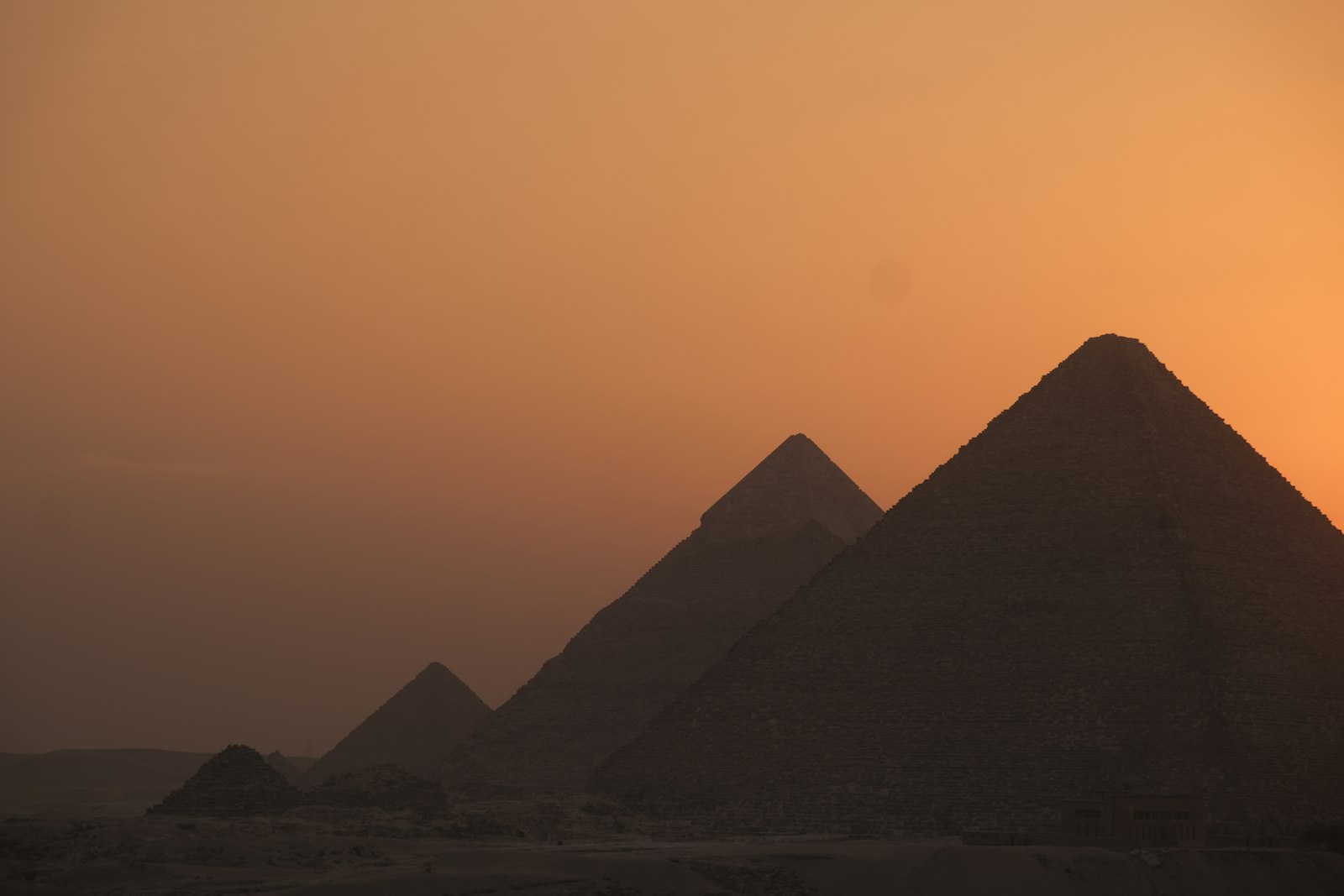
I start you at the pyramids before the gates open to the day crowds. The air is still cool, the limestone almost pink, and a Egyptologist I trust meets you at the Sphinx so the carvings actually mean something. Later you cross to the Grand Egyptian Museum, where Tutankhamun's full burial treasure now sits together for the first time. You stand close to the nested gold coffins and the funerary mask, and the room goes quiet around you. Back at Mena House, you take mint tea on a terrace that faces the Khufu pyramid directly. Dinner is grilled sea bass and a plate of warm baladi bread with dukkah. I keep these three days unhurried on purpose. Cairo rewards the traveler who lets it unfold slowly, and you will want the rest before the river.
The River Slows You Down
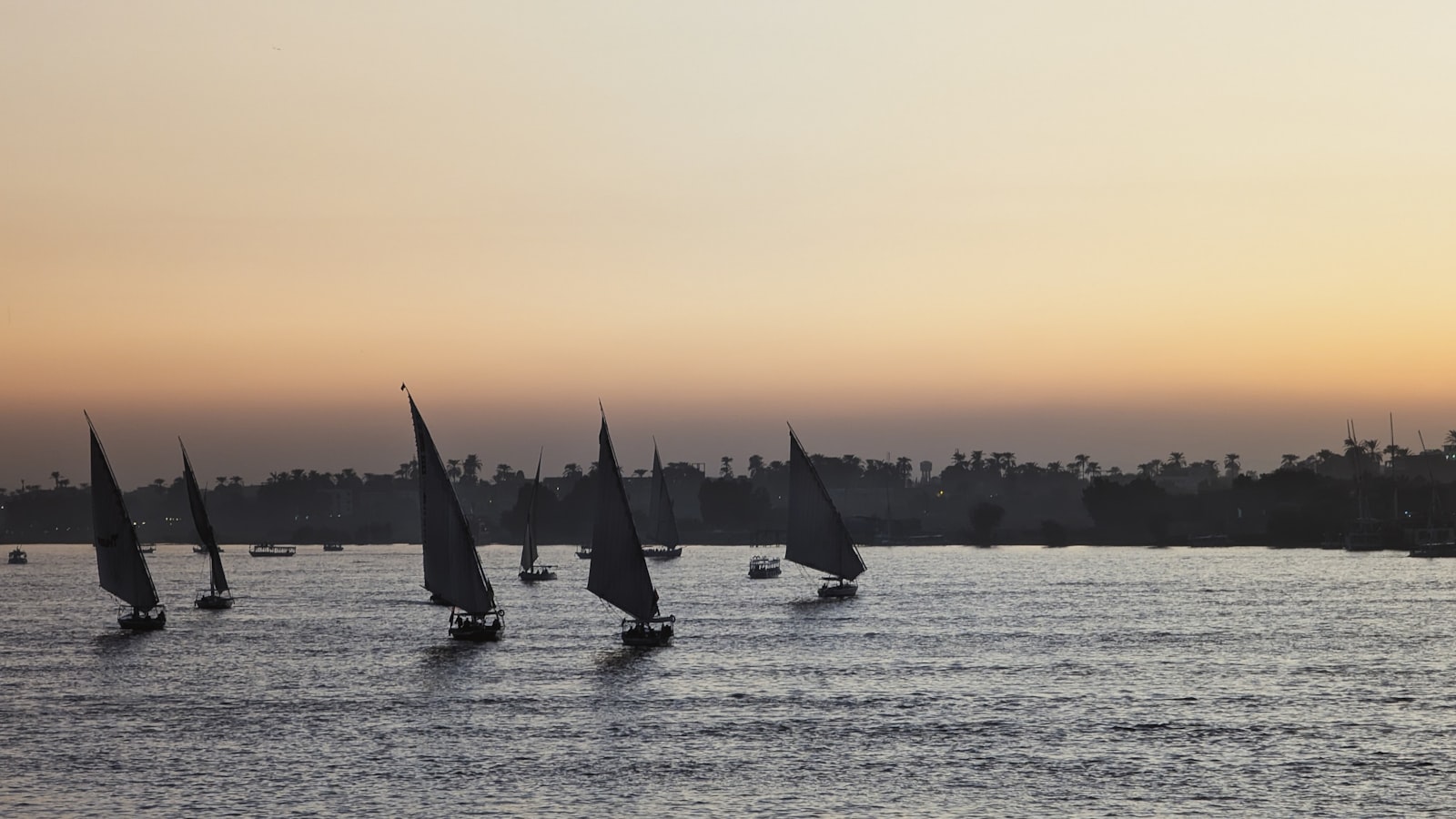
Aswan is where Egypt softens. You fly south, and the Nile here runs clear and broad past granite islands and stands of date palm. In the late afternoon I send you out on a felucca, the old lateen-sail boat that has worked this water for centuries. The boatman cuts the small engine, the sail fills, and the only sound is the hull moving through the current as the sun drops behind the western dunes. You drift past Elephantine Island while the light turns the river to copper. Evening is yours at the Old Cataract, on the terrace where Agatha Christie wrote, with a cold karkade and the Nubian desert glowing across the water. I plan one full night here so you feel the pace change. From this point on, the journey moves at the speed of the river, and you stop checking the time.
Four Nights Afloat
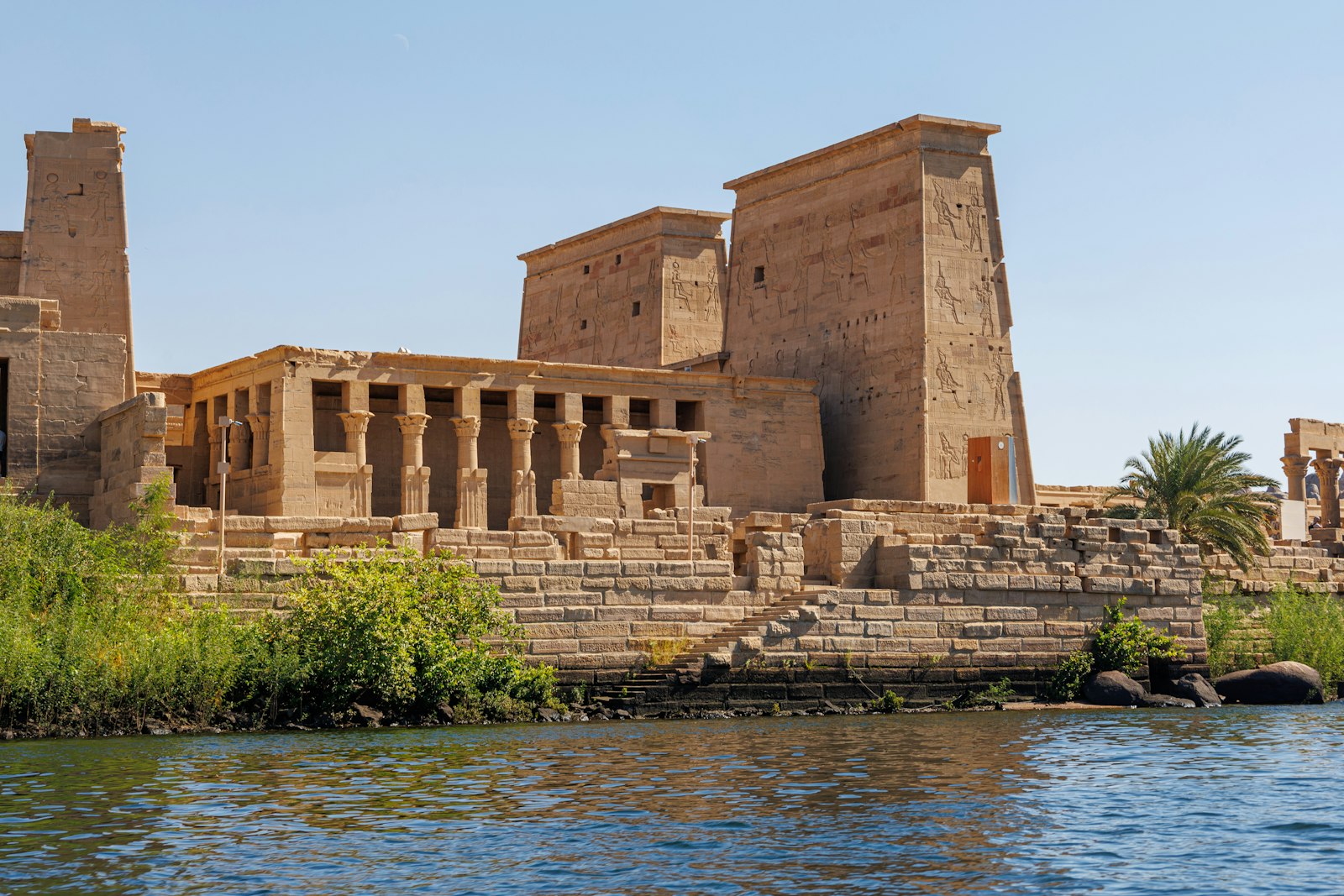
These are the days people remember most. I put you aboard a small restored riverboat, the kind that carries a few dozen guests rather than a few hundred, and you sail north toward Luxor. Mornings bring the temples. At Kom Ombo you walk in at dusk, when the columns are lit and the carved crocodile reliefs throw long shadows, and the temple is nearly empty. At Edfu you stand inside the best-preserved sanctuary in Egypt. Between stops there is nothing to do but watch the bank slide by, farmers working fields, a boy waving from a mudbrick village, white egrets lifting off the reeds. Lunch on the upper deck might be grilled chicken with rice and a tomato salad dressed in lime. I arrange these four nights so the river itself becomes the experience, not just the way between sights.
Where Dawn Turns Amber
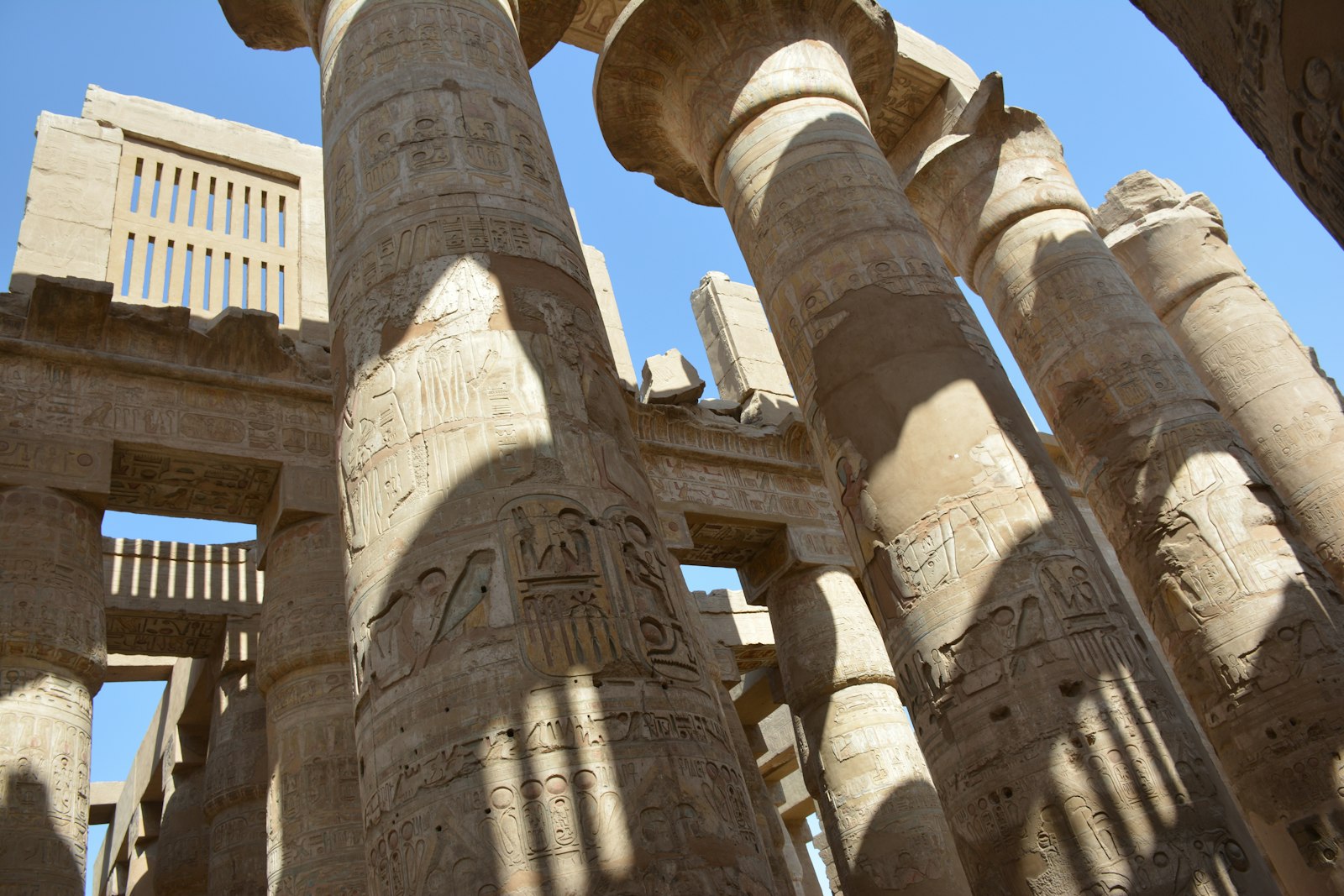
Luxor is the finale, and I open it in the air. Before sunrise you lift off in a balloon over the West Bank, the basket rising as the first light catches the Valley of the Kings and the green ribbon of farmland along the river. The temples below turn from gray to amber while you drift in near silence. On the ground you walk the Great Hypostyle Hall at Karnak, where the columns stand so tall and close that the carved hieroglyphs run up past the reach of the morning sun. In the afternoon I keep things slow, a cold hibiscus on a shaded terrace, time to let ten nights settle. Dinner is a tagine of lamb with apricot, eaten as the call to prayer drifts across the river. You leave Luxor the way you arrived in Cairo, a little quieter than before.